Thursday, 30 June 2016

Dumbarton Castle: Rock Of The Clyde


The Impregnable Dumbarton Castle
In July 1548, four French ships sailed from Dumbarton Castle. Aboard one of these vessels was the six year old Queen of Scots. It would be thirteen years before she returned to her country. Just like Mary's story, Dumbarton Castle has played a major role in Scotland's history.

Dumbarton's History:

View of the volcanic rock     
Dumbarton Castle itself stands guard over the point where the river Leven meets the river Clyde and its history dates back at least 1, 500 years. Today it is a prime tourist attraction for Historic Scotland.

Very little of the medieval castle survives besides the Portcullis Arch and the ruins of the Wallace tower. Today, a visitor will see the gun batteries, Governor's House, French Prisons and powder magazine; all built during the Jacobite rising in the 18th century. According to the official souvenir guide, Dumbarton Rock was 'the strongly fortified British city of Alt Clut'. Built upon an ancient volcano, the 'Rock of the Clyde' has gone through many significant changes up to the 20th century.

It has been a strategic battlement during the reign of King alexander III during his war with King  HÃ¥kon IV of Norway. Upon defeating the Norsemen relatively little was known about the castle's development other than it being a royal residence.
Wallace is said to have been held prisoner
in this very room

It was here during the Wars of Independence that the castle housed its first named prisoners, as William Wallace had three English knights sent there clapped in irons. It is believed that Wallace himself was later held prisoner in 1305 before being transported down to London for his execution; it is believed the Wallace Tower within the castle grounds is named so in honour of Scotland's national hero. It is here that Mary Queen of Scots resided in 1548 during the 'rough wooings'.  
Foundations: All that survives of the Wallace Tower
The Castle & Mary Queen of Scots:

Mary Queen of Scots

Mary was brought here in February 1548 by her mother for her own safety as the English troops ransacked Scotland under the orders of the Duke of Somerset, uncle to King Edward VI. The 'Rough Wooing' itself began almost as soon as King James V died; his uncle King Henry VIII of England sought the match for his son Edward for it would be a great alliance against the French and would bind the Scots to Edward as the future King of both England and Scotland upon marrying Mary. 

Of course, such an alliance would go against French interests and Mary's French mother, Marie de Guise, would not accept such an alliance; especially once Henry demanded that Mary be sent to England and brought up in the new Anglican faith. Marie refused and turned to King Henri II for support. Eventually they agreed that Mary would marry his son, Francis. As the situation became more precarious it was decided that Mary would be sent to France and raised there. 
The Clyde river as it is today

When the French arrived Mary had been living at Dumbarton for six months with her mother. It was here that four French galleys came in July 1548 and spirited the little Queen of Scots to France while her mother remained behind to defend her daughter's crown.  

Upon her return Mary only visited the Castle once in 1563 during a royal progress. When she was overthrown in favour of her son, a group of supporters took up residence inside the castle in 1568, remaining there for three years before a raiding party scaled the castle's precipitous slope at night, taking them by surprise.


A model of the castle during Mary's stay

After Mary:

The French prison built around 1790

Dumbarton later carried on as a state prison, guarding such men as Patrick Stewart, 2nd Earl of Orkney. From supporters of Bonnie Prince Charlie to French Generals of the Napoleanic wars were housed within the grounds of Dumbarton. By the 19th century the castle had become a prime tourist attraction despite still being a garrison. Even as recent as WWII an anti-aircraft battery was set up at the top of the rock itself; on 5-6 May 1941 that Dumbarton Castle saw its first enemy attack in over 300 years when the German Luftwaffe dropped four high explosive bombs upon the rock. 

Today:
The Gunpowder Battery

Visitors to the castle can witness several ages of history with the Rock's defenses, as well as viewing spectacular sights around the Clyde and over the Dumbarton town itself. It has seen so much war and peace over the centuries from the Viking raids to Mary's departure to France; from Queen Victoria visiting in 1847 to its attack in 1941. To this day it stands, emersed in history and a testament to its enduring impact today.


A beautiful view of the rock


Further reading:

Dumbarton Castle Souvenir Guide; Historic Scotland, 2007
Historic Dumbarton; P Dennison and R Colman, 1999
Excavations at Alt Clut, Clyde Rock, Strathclyde, 1947-1975; L & E Alcock, 1990

Mary Queen of Scots: A Queen Who Lost It All & Became A Legend

A Queen who lost three kingdoms. A wife who lost three husbands. A woman who lost her head.

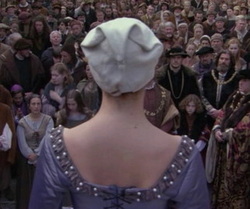
This is the tagline of the European produced movie Mary Queen of Scots by director Thomas Imbach. And it sums up the life of Scotland's tragic Queen perfectly.

Director Imbach wrote the film based on a biography by Stefan Zweig, a biographer and playwright, who's approach to Mary's story was told with more dramatic flair than the average biography. One of the main viewpoints from Zweig was that Mary had been in a position of power and command for so long that it drained her; when Bothwell caught Mary's eye he was commanding and took control of the situation taking the burden of rule from Mary's shoulders.

Indeed, this is a main theme of the film, as Mary struggles to gain control of her Scottish Kingdom, where all the lords are backstabbing and power hungry, an issue that Mary hasn't dealt with before. This is highlighted very early on when Elizabeth Tudor becomes Queen of England. Mary is determined that the new English Queen will love her, and when asked how she would get that she simply responds that she will charm her into loving her.

This is one of Mary's weaknesses that she believes will win over the Scottish Lords but sadly her charm is not what they want. They want her to command, and do what they want her to do. It's through this struggle of queenship and authority that Imbach gives us a human portrait of Scotland's Queen. A woman facing stress, rebellion and betrayal. And as she struggles through it we can see her pain; we can feel it as she rides along the Scottish grounds screaming at the top of her lungs. It's a relatable moment for anyone who has struggled to keep control of their life.

The film highlights Mary's struggle to rule
Imbach's version gives the story of Mary a fresh perspective; not a woman who was too busy enjoying herself to rule, but a woman who was ill prepared for ruling her own Kingdom for she was raised a French princess, prepared for French Queenship. The contrast between the French court and the Scottish is shown almost immediately through the harsh landscape of Switzerland, which substitutes for Scotland very well. The landscape is beautiful, as Imbach does show some beautiful aerial shots, using long shots of the vast landscape to emphasize Mary's growing isolation throughout the film.

Camille Rutherford portrays a well rounded Queen of Scots
Mary herself is played by Camille Rutherford, an up and coming French actress who's beauty and physique is possibly the closest to the true image of the real woman that any film or TV project has come close to. Mary was said to be close to six feet tall, and Rutherford is the first actress to resemble the queen of Scots in height, colouring and beauty. She proves to be a strong actress in the part. Rutherford captures her character wonderfully, exuding sensuality, wit and charisma that were famous characteristics of Mary. But she gives us a more complex individual; she is strong willed, confident and beautiful but she becomes isolated, she is betrayed and in her bid for happiness she loses everything. It's a tragic story of a woman born to rule but with all the odds stacked against her; ill prepared for Scottish rule after a French upbringing.

It is also a refreshing take on history for its historical accuracy, compared with the recent Hollywood series Reign, based on Mary's time in France. Mary Queen of Scots is a well made production with a strong lead performance that captures the woman behind the myth. For any history fan or period drama fan, this is a must see but is not recommended for a more mainstream crowd. If you're looking for The Tudors I suggest looking elsewhere, or waiting for the upcoming Hollywood production of Mary Queen of Scots written by Michael Hirst (Elizabeth, Vikings, The Tudors). For a human portrait on an iconic tragedy this is worth at least one viewing.

* Mary Queen of Scots will be released on DVD & Blu-ray 27 October. You can pre-order a copy on Amazon now.

Linlithgow: The Pleasure Palace

James VI's North range from outside

Linlithgow Palace rests roughly 18 miles from Edinburgh and is a popular tourist attraction associated with Mary Queen of Scots. Today you will see only ruins; a fire in 1746 robbed the castle of its former splendour. Yet, within its stone walls there remains a glimmer of its former glory.

Hallway through East Range
Origins

The castle first existed as a manor house that once stood as an important strategic point for Edward I of England during the Scottish Wars of Independence until 1424 when a great fire the building and surrounding village. Six years later, King James I of Scotland commissioned a new palace to be built in its place. In his lifetime the East range was built; the main attraction here is the Great Hall where many celebrations were held. There is also a kitchen and at that time royal lodgings,  which were later rebuilt in the West range of the palace.

Over the years the palace was expanded; James IV added a chapel and new royal lodgings within the West range; James V added the exquisite fountain and the Southern entrance. Indeed, much of what stands today was completed at the time of Mary Queen of Scots' birth in December 1542. Mary herself added little to the palace decor, but she is closely associated with the visitor attraction today.

James I to James IV

James I's Great Hall
The Great Hall in the East range still stands as an example of stunning medieval interiors; it was built during James I's reign, but was updated under James IV who added the great fireplace at the end of the hall. Historic Scotland's official souvenir guide describes the interior as 'festooned with statues (although only the stone brackets remain) and decorated with tapestries or hangings.' The north-east corner houses the kitchens, with serving hatches leading straight into the hall.

Aside from the great hall, James I also had royal lodgings fitted and a grand entrance way in its centre. His grandson, James III went on to extend the royal lodgings, but it was James IV who completed the full quadrangle of the palace, During his reign James IV had a Chapel installed within the palace; its location the former royal lodgings of James I. He then expanded the palace further, adding lodgings to the West Range that are still visible today; a visitor can walk through the King's Hall to the Presence Chamber and then into the Bedchamber where the King slept which lead out onto the North Range.

King James IV's Presence Chamber
An illustration in the Souvenir guide shows the King's Hall as the largest and most public part of the lodgings, whereas the further in you go the smaller the rooms get. While no floors exist above these chambers, it is believed that in its prime, the Queen's lodgings sat above the King's, but there is no definitive proof of this and it is still debated today where exactly Mary Queen of Scots was born. The above floor in the West Range is considered a possibility, but there is the possibility that the North Range may have housed the Queen's private lodgings before its collapse in 1607.

The North Range commissioned by James VI
The Forced Contribution of James VI

As James IV's North Range no longer exists there is no way to know for sure, but the North Range that stands today was built during the reign of James VI after he had moved down to England. The style of the building indeed differs from the rest; according to Linlithgow's souvenir guide the building is designed similar to the Danish architecture of the time, which is possible as James VI's Queen was a Danish princess. He may have been influenced by the architecture when he journeyed there to meet his bride. There are indeed similarities within the building's wall structure and windows which resemble the works of Hans van Steenwinckel the Younger, architect to King Christian IV of Denmark (brother of Queen Anne).

Example of Steenwinckel's architectural style.
James V's Fountain before East range entrance
James V's Palace

James V added a new southern entrance around 1535 that today is the main access point to the Castle ground. He also had a fountain built in the centre of the courtyard, a decorative display of James V's power and sophistication to the world. The Historic Scotland guide book explains that the fountain is a symbol of the union between Scotland and France through his first wife Madeleine de Valois, daughter of King Francis I,

'The tiered arrangement of three basins is surmounted by a crown is surmounted by a crown, representing the king's superiority. Water, symbolising the benefits of his rule, pours from the mouth of the sun-face on the underside of the crown... This is decorated with sculpted figures; these figures conveyed James' status as a patron of the arts.'

Tragically, Madeleine died within days of setting foot in Scotland.

The palace went on to be a part of his second wife's, Marie de Guise, dower lands and she gave birth to Mary Queen of Scots on 8 December 1542. It was here that she received word that James V died; history was repeating itself as James V had been born here in 1512. One year later, his father died at Flodden field; his mother was in residence at Linlithgow when she received word of James IV's death. Today, the highest point in the palace is still associated with his wife, known as Queen Margaret's Bower, where she is reputed to have lay in wait everyday for word of her husband as he headed south of the border to face the armies of Henry VIII.

View of the East range from the cellars
Mary and Beyond

Mary spent the first six months of her life here and didn't return for another 20 years, when she stayed only for a handful of days at a time. She had stayed here before setting off for Edinburgh when she was intercepted by the Earl of Bothwell and forced into a marriage that led to her forced abdication and imprisonment.

Upon James VI's move south, the palace began to decline. It was temporarily renovated when Charles I stayed for one night in 1633 on his progress through Scotland. This was the last time the palace was used as a royal residence. Bonnie Prince Charlie visited briefly on his journey to reclaim the throne in 1745. It was then destroyed on the the orders of the the Duke of Cumberland in January 1746.

Despite only the stone of the palace remaining today it still stands as a beautiful example of Scottish history with each subsequent Stewart King each engraving their own personal style upon the place for us to glimpse into their world.


Further reading:

Linlithgow Palace: The Official Souvenir Guide published by Historic Scotland.

Monday, 20 June 2016

I Beg Your Pardon: The Story of Catherine of Braganza


Queen Catherine of Braganza
On Thursday 5th February, King Charles II of Britain took his last breath. It was a shock to everyone that the King became ill so suddenly, and upon his final hours he received many people bidding their final farewells. The Queen was one of these, but she was so distraught she had to be taken back to her apartments. After she recovered from her grief she sent a message unto the King, begging his pardon if she had ever offended him.

‘Alas, poor woman’, her husband replied, ‘She beg my pardon! I beg hers with all my heart.’

For she had stood by her husband’s side through his many ups and downs; and his many affairs which the Queen endured for the whole of their married life. And although she had built a good rapport with some of the King’s women, it was not an easy life for Catherine of Braganza. The Portuguese princess had been raised in a strict household, so the decadence and debauchery of Charles’ court may have come as a shock. 

The marriage of Charles II and Catherine was a matter of state, the idea of love had never entered the equation. For Charles, Catherine was a great prize for she came with a dowry worth £2 million cruzados (£320,000). And for a King with very little money, it was a very lucrative offer; even despite the Spanish trying to prevent the match, describing the princess as ‘sickly, ugly and deformed.’

But Charles didn't listen; the dowry was too good. Indeed it proved too good to be true as the Portuguese begged to be allowed to pay it off later as they found their funds a little dry. It was eventually paid off in 1670. Alas, Catherine arrived at Portsmouth on 14th May 1662, greeted by the King’s brother James Duke of York. The King eventually turned up on the 20th to officially meet his new bride; and the next day they were married.

The first couple of months passed by well enough; the honeymoon stage getting the newlyweds off to a good start. Even some of the nobility praised the queen for her pious and virtuous behaviour. But, as with all honeymoons, it came to an end. Charles' mistress, Lady Barbara Castlemaine, had given birth to the King's illegitimate child.

Lady Castlemaine
Even before she left Portugal Catherine had been warned by her mother of Charles’ mistress, Lady Barbara Palmer, who did not like the idea of Charles having a wife; indeed her aggressive nature made her determined not to bow to the Queen at all. She wanted a high position within the Queen’s household – Lady of the Bed Chamber. The new Queen refused, crossing her name off a list of prospective candidates.

Sadly, the King wasn’t taking no for an answer; for Charles this was a question of marital authority, he couldn't have Europe saying he was ruled by his wife. He brought Lady Castlemaine into the Queen’s presence; the Queen unaware of her identity. When she realised who she was she broke down in tears, her nose bleeding and she had to be carried to her chamber upon fainting.

One writer describes the character of Lady Castlemaine as that of ‘a lovely, unblushing 19-carat bitch with a deadly instinct for the jugular.’ In this regard, Castlemaine must have relished the distress she caused the Queen, knowing that she had the King’s favour. And Catherine’s own reaction of rage gave many at court the opinion that she was impossible. It didn’t seem to occur to anyone that such a request would be a great insult to Catherine.

The King especially believed that he was right in his pursuance of the matter, regardless of the cost to Catherine. She threatened to return to Portugal; the King threatened to send her servants back, believing them responsible for her ‘perverseness’  in refusing to have his mistress as her Lady of the Bedchamber. Today we would see such a man as abusive, but back then he had all his courtiers on side, encouraging him to stand firm. And so he did.

He removed the majority of Catherine’s servants, leaving only a few minor ladies to wait upon her. She was left in almost total isolation, submitted to cruel psychological pressure as the Lady Castlemaine was openly given chambers next to the King’s own.  Even when the King did join the Queen for a meal, the Lady Castlemaine was by his side. One can only imagine the pain that Catherine suffered under psychological abuse. As a result she eventually gave in to the King’s desires.

Many were disappointed in the Queen for conceding when she did. There were rumours that the King was on the verge of giving in to her. But without any council how could she know if she was in a losing battle or not? But concede she did, and she was judged by the courtiers as a ‘tiresome neurotic’ who had ‘been brought to heel’. After this episode the only way that the Queen could regain any form of influence was through bearing a child; a child that sadly would never come.

King Charles II
Between 1663 and 1665 Lady Castlemaine produced three children, most likely the King’s offspring. But Catherine remained without, going to special baths in hopes that the waters would produce a miracle. But she would never produce an heir, sadly miscarrying at least twice. In October 1665 she became dangerously ill; even deliriously speaking of children that she and the King had. When she believed herself to be dying she comforted herself in the knowledge that in dying she made a place for a new consort, one worthy of the King’s affections. It reveals so much of how Catherine valued her own self worth, a trait that would be seen as a form of depression today. But back then no one knew of such things, and the Queen was willing to face her own death like a martyr.But she would never be one, she eventually came out of the delirium and her health improved.

Upon her recovery there was also a question of the succession, with many attempting to convince Charles to divorce Catherine in preference for a more productive wife. It is likely that Charles considered it, weighing the pros and cons before declaring before parliament that he would not divorce his wife. After 1665 the relationship garnered a surmountable amount of affection and trust on both sides.

When the Queen was attacked by malicious rumours of conspiracy the King immediately dismissed them. He would not credit his Queen of such acts. And when the King's illegitimate son, the Duke of Monmouth, attempted to gather support for the throne, there was another call by parliament to put Catherine aside; the King demonstrated his growing loyalty towards his wife, making it clearer than ever that she could not be attacked by the vipers of his court. The King had placed his own pleasure above the feelings of his wife for the majority of their marriage; but when Parliament attempted to discredit her in any way he stood firm, standing up for her as his wife and Queen. Perhaps he was propelled by guilt, remembering his treatment of her with Lady Castlemaine; she was eventually banished from court, leaving a sort of tranquility to replace the aggressive atmosphere she left behind.

Perhaps it’s the optimist in me, but perhaps the King did grow to resent his early treatment of Catherine, especially as she stood by him through the many tribulations he faced throughout his reign; and never once saying a negative word against him. She had proven herself a loving and understanding wife; a good companion who had gained the affections of the British people; a confidante in the ways that his many mistresses could never be. And in recognition of the great duty that this sweet and affectionate woman did him over the years, it was only fitting that his final words in regards to her were to beg her pardon for his own faults.


Resources:

King Charles II; Fraser, Antonia; Orion Books, 1979

The King's Wife: Five Queen Consorts; Gray, Robert; Secker & Warburg, 1990

Tuesday, 24 May 2016

History vs Hollywood: Execution of Anne Boleyn

The Tudors are possibly the most famous royal family in British history. And they are consistently the subject of various dramatic works. Since the beginning of the 21st century alone there have been numerous TV serials and movies released, focusing on Henry VIII and his passion for the infamous Anne Boleyn, mother of Elizabeth I.

Here I will discuss the execution of Queen Anne and its portrayal in two very different drama series.

Wolf Hall: Anne Boleyn's final moments are played out through the eyes of Thomas Cromwell, the lead character of the series. We see her exit the tower and make her way to the scaffold, the whole time distracted and looking up towards the tower. She then makes her final speech and is subsequently beheaded.

The Tudors: The final moments of Anne Boleyn are told through her eyes, From her exit onto Tower Green through the throng of a large crowd to the scaffold where she makes her final speech and is subsequently beheaded.

Both series create a riveting scene that is memorable, but which one is more accurate?

The Facts:

Anne Boleyn is the most famous wife of Henry VIII. She gained the crown by supplanting Henry's first wife Catherine of Aragon and she gave him his daughter, Queen Elizabeth I.

Their love story is one of the most fascinating points in English history, a cornerstone that changed the direction of England forever. Henry disgarded his first wife, shunned his only legitimate daughter; brought down his most loyal minister; executed one of his closest friends and tore England away from the Catholic faith; all for the love of one woman.

The Fiction:

Her rise and fall has fascinated people for 500 years. In the wake of the 20th century came the media revolution. Over the next 110 years the exploits of Henry VIII and Anne Boleyn have been romanticized on screen, mostly as a tragic love story to entertain the masses.

Anne Boleyn's first on screen appearance was in 1911 in the short silent Henry VIII played by Laura Cowie who reprised her role in the 1914 short Anne Boleyn. After the German production of Anna Bolena (Lubitsch) in 1920 Anne remained a supporting character in films such as The Private Lives of Henry VIII (Korda, 1933) and A Man For All Seasons (1966).

One of the most celebrated films centering on the love story of Henry VIII and Anne Boleyn is Anne of the Thousand Days (Jarrott, 1969) starring Richard Burton and Gieneve Bujold, which chronicled their romance from its fiery beginning to its tragic end. After BBC's miniseries The Six wives of Henry VIII it was 37 years before a drama brought Anne Boleyn into the foreground in the same way as Anne of The Thousand Days.

A Modern Queen:

The Tudors (Hirst, 2007) first aired on the subscription channel Showtime and is the first in a long time to truly challenge the perception of Anne Boleyn and the factors behind her pursuit of Henry VIII. Actress Natalie Dormer played the iconic role of the Jezebel who bewitched a King; a woman who loved her husband so much it destroyed her. It's the first sympathetic portrayal that shows a multi-dimensional woman that is just as hard today to define in one category as it was 500 years ago. Dormer's performance is regarded as one of the greatest portrayals of Anne Boleyn in recent memory, leaving a hard act to follow.

January 2015 saw the BBC return to the story of Henry VIII, this time with Claire Foy as Anne Boleyn. Wolf Hall is based on the Pulitzer prize winning novel of the same name and its sequel Bring Up The Bodies by Hilary Mantel. It is told from the POV of Thomas Cromwell, one of Anne's strongest supporters and greatest enemies. Through this view the audience receive a very limited view of Anne Boleyn, a haughty and temperamental woman who's difficult for an audience to relate to.

Anne's Story:

Both series take very different approaches to the dramatization of the Tudors. Where The Tudors concentrates on the dramatic influence of events, often taking liberties with the timeline and period details, Wolf Hall expresses a strong emphasis on the historical facts above the drama, in the belief that the facts themselves are enough to entertain an audience.

With that in mind, both series take a very different take on Anne's final moments. It is certain that Wolf Hall wins in historical accuracy, showing the execution from an audience stand point, building up the tension as everyone waits for the final blow.

However, dramatically The Tudors gives a more emotionally charged scene, sympathizing with Anne as she lives out her final moments, making her way through a judgmental crowd towards the scaffold and giving her final speech, the camera offering a POV shot to give the viewer a glimpse of what Anne may have experienced in her final moments.

'I have come here to die': 

Overall, both series are well made and their creative differences both offer up scenes that are emotionally affecting. Despite the different POVs both scenes do follow the historical backdrop rather well. However, Wolf Hall does prove much more authentic. The execution itself with the executioner removing his shoes and Anne Boleyn having a blindfold over her eyes, to the accuracy of her final speech word for word. The Tudors alters the final speech slightly  and omits the blindfold, instead distracting Anne with 'Boy, fetch my sword'. As she turns she looks up to see birds flying away from the Tower. It's an effective scene that reinforces the image of Anne as a tragic heroine.

Where the BBC created a historically authentic costume piece, Showtime offered up a dramatic interpretation that modernized the story for a 21st century audience to relate to, which made the history easily accessible to those who didn't know anything about the Tudors to those who know and have a passion for their stories. This is where I feel that Wolf Hall falters slightly, because we see everything through Cromwell's eyes it changes the perception of Anne, making her less sympathetic, simplifying her character to that of a cold and arrogant person without much depth. I won't deny that these were aspects of her character but they were not the only traits she possessed. She believed in reform, desired to help unfortunate people and did much charity work, but Wolf Hall omits so much of Anne's various facets that it is hard to see how she managed to seduce the King of England with so little charm.

In the end, Wolf Hall does well with historical facts, but The Tudors succeeds in creating multi-dimensional characters for a modern audience. Therefore, Natalie Dormer's performance, for me, is by far the most affecting of the two portrayals, giving an opinionated, seductive, arrogant and at times sympathetic performance that stays with the viewer longer than Claire Foy's performance; though in her defense she worked with what she was given and did play the role well in Wolf Hall. But historically I think Dormer captured that complex nature of England's most infamous Queen.

Thursday, 3 March 2016

The Scandalous Lady W

Lady Seymour Worsley

In this day and age it is easy to take the freedoms we have for granted. Women have the right to vote, we can own property and it is no longer deemed shameful to remain unmarried and sexually active simultaneously (to most people). It's a far cry from the Georgian era when a woman was regarded as a man's property, without rights of their own. If a husband had an affair it was natural, if a woman had one she was shunned by society, not allowed to petition her case or even demand a divorce. That was the husband's privilege.

It's a frightening notion for any modern woman, but to a woman of the 18th century it was their lot in life. And it is a major aspect in the biography Lady Worsley's Whim by Hallie Rubenhold - later reissued as The Scandalous Lady W - who explores the complex and scandalous union of Sir Richard Worsley and his wife Seymour, who ran off with her husband's close friend Captain George Bissett. It resulted in Worsley suing Bissett for damages worth up to £20, 000 in compensation. A shocking sum even at that time.

Sir Richard Worsley, 7th Baronet
The aim of this was to humiliate and bankrupt Bissett while restoring Sir Worsley's honour as a victim. A huge miscalculation as Worsley didn't factor in his wife's hatred towards him, and considering their extracurricular activities it's easy to see why. It is not certain that Lady Worsley made the conscious decision to defend her lover by having her own character degraded but the defense was determined to prove to the whole country that Lady Worsley was not worth £20, 000. As a result the trial commenced with the Defense bringing to light the shocking truth: that Lady Seymour Worsley 'had been seriously compromised long before the captain made off with the spoiled goods'.

Of course this was a matter of Worsley's word against the gentlemen who came forward from Lord Deerhurst to her personal physician Dr William Osborn; for the alleged lovers the questioning ran along the lines of 'When did your first acquaintance commence with Lady Worsley?' and 'Did you frequently visit at Sir Richard's house?' As for the doctor, Osborn was not comfortable betraying his patient's confidence. 'My business was to cure her' was Osborn's answer, verifying he did not know how the Lady became ill but that he had never been called in regards to Sir Worsley's health at any given time. Again, not necessarily proving adultery or foul play in an explicit capacity.

Worsley's complicity within his wife's affairs was not proven until the statement of a bathing woman was read out in court, showing the extent of Worsley's duplicity. Rubenhold explains:

'Since birth [the priviledged classes] had been trained to be blind and dependent. When surveying the room they saw only the bodies of those who mattered. In most cases this excluded virtually everyone of a lesser social standing. As a result the privileged classes frequently forgot themselves in front of a theatre of labourers and staff, whose presence they failed to acknowledge'.

After the verdict Sir Richard Worsley
became the subject of ridicule.
Such was the case with Mary Marriot who held vital information that would make or break the case. Both sides sent their representatives down to interview the woman in question, an unimportant worker in the eyes of the privileged. But on that day she gave the damning evidence as follows:

'Lady Worsley used to come to the cold bath near Maidstone to bathe, and that she [Marriott] used to attend her; that Sir Richard and Mr Bissett were generally with her; and that the last time she came, which was about noon, in September last... Sir Richard tapped at the door, and said 'Seymour! Seymour! Bissett is going to get up to look at you'; and looking around she saw his face at the window... and that she did not see the plaintiff on the outside but believes he must help the defendant up'.

Such a declaration decided the case. The jury retired to consider their verdict. Upon their return they decreed that Sir Worsley was indeed entitled to compensation towards the dishonour he recieved from the plaintiff, and awarded him what they deemed appropiate: the total sum of one shilling.

BBC adaptation of Rubenhold's biography
It was a scandalous and entertaining case that was turned into a BBC film last year starring Natalie Dormer (The Tudors) which blended fact with fiction well enough, turning Lady Worsley into a heroine for the modern woman, blending the scandalous sexual proclivities of the Worsleys with the integrity of the courtroom. And Dormer proving her acting chops in her first leading performance after supporting on The Tudors, Game of Thrones and Casanova. Of course liberties were taken, with it being Seymour's idea to defame her name and appearing in the courtroom as her infidelities are exposed

As Rubenhold wrote, 'A married lady's character was a fragile thing'. Even after it was proven that her honour was depleted by her husband, Lady Worsley was still shunned by the respectable side of society while Sir Richard, due to his humiliation, fled to Europe, travelling through Greece and collecting various artifacts. But Seymour was left behind to deal with the judgements of her fellow socialites, running up large bills in her husband's name before eventually being exiled to France by Worsley himself who refused to grant her a divorce which led to the eventual split from George Bissett before her four year exile.

When Sir Richard died in 1805 Seymour married her lover Jean Louis Hummel, who was twenty one years her junior, who took his wife's name. She also regained the fortune that had been originally bequeathed to her over thirty years before. In the end Seymour enjoyed a quiet and happy life in her final years with her young husband.

Saturday, 9 January 2016

A Dead Good Read

I have to say I was surprised by how much I enjoyed this book. It was picked up in poundland one day and it proved to be a very entertaining read.

It centres on the friendship of Krissie and Sarah and shows the fractures of their fragile lives through their connection. Sarah wants a baby but can't, Krissie has one after a one night stand.

The author has written an interesting and entertaining book, with sparks of dark humour in the even the darkest moments. The characters are interesting, layered and flawed; their imperfections are what make them tick here and you are left curious as to how these two women have remained friends for so long despite their differing approaches to life; yet through that they need each other.

What is interesting is the psychological aspect of their personalities seeping through the pages; through their desires and their paranoia and fears. The book from one character's pov to another very well, usually connecting one's story with the other's; even highlighting someone's fragile state through the differing povs.

A surprisingly entertaining book, a perfect summer read that does keep you guessing and invest in the characters. Definitely worth a read.